
Higher than Springfield, home of the region's broadcast towers
Tree Service in Fordland, MO
Exposed uplands where wind and ice hit trees first.
- We come out and look before we price, anywhere in Springfield and nearby towns
- Every task on the quote has its own line
- Haul-off spelled out on the quote
Fordland Sits Up High
Tree Service in Fordland deals with altitude. The village sits at about 1,604 feet on the southeastern edge of the Springfield Plateau, high enough above Springfield that the market's television and FM radio stations put their towers here. That same elevation means trees in and around Fordland catch more wind, more ice and more lightning than trees in the river valleys below.
Exposure and tree structure
Trees that grow on exposed uplands often develop thicker trunks and lean away from prevailing winds. That adaptation helps, but it does not protect against sudden storms. Large limbs on the windward side, long horizontal branches and trees standing alone in yards or pastures are most at risk. On a Fordland property, we look closely at those trees and recommend thinning, reduction or removal depending on the target and the tree's health.
Webster County and the ash borer
Foresters confirmed emerald ash borer in Webster County in late 2018, and dead and dying ash are now common in fencerows and along roads in the area. Dead ash become brittle, and on an exposed site like this, they can drop large limbs in a moderate wind. If you have ash near your house, drive or a road, do not wait for it to fall.
A railroad village
Fordland was platted in 1882, when its post office also opened, and was named for J. S. Ford, comptroller of the Kansas City, Fort Scott and Memphis Railroad. U.S. Route 60 runs through the village, about four miles west of Diggins and 6.5 miles northeast of Rogersville. Its 778 residents live on about 1.11 square miles, and most of the land around the village is rural.
Lightning-struck trees
Tall trees on high ground are more likely to be struck by lightning. A strike can blow bark off in a long strip, split the trunk or kill the tree outright, sometimes with damage that is only visible later. If a tree on your property has been struck, watch for wilting, bark loss or cracks over the next season. Some trees recover; others decline. We can look at a struck tree and tell you what we see.
Common Fordland work
- Removing dead ash and other hazard trees
- Thinning and reducing exposed yard trees
- Inspecting lightning-struck trees
- Clearing fencerows and lanes
- Storm cleanup after wind and ice
- Stump grinding
Ice on the uplands
Winter ice storms tend to be hard on high, exposed ground. Ice can coat every twig and multiply the weight on a branch many times over, and long horizontal limbs and trees with tight forks are the first to fail. Pruning ahead of winter, removing deadwood and shortening the heaviest limbs over roofs and drives, is the most practical defense for Fordland homeowners.
Ask for an estimate
Call (417) 374-2037 or send the form with your location and a short description. We serve Fordland and the surrounding area along U.S. 60. Get a free estimate
Fordland Facts
- High elevation. Fordland sits at about 1,604 feet on the southeastern edge of the Springfield Plateau. Because it is higher than Springfield, it hosts a tower farm for the market's TV and FM stations.
- Ash borer in Webster County. Foresters confirmed emerald ash borer in Webster County in a December 2018 update, along with Hickory and Wright counties.
- Railroad origins. Fordland was platted in 1882 and named for J. S. Ford, comptroller of the Kansas City, Fort Scott and Memphis Railroad.
- Location. The village of 778 residents lies on U.S. 60, about four miles west of Diggins and 6.5 miles northeast of Rogersville.
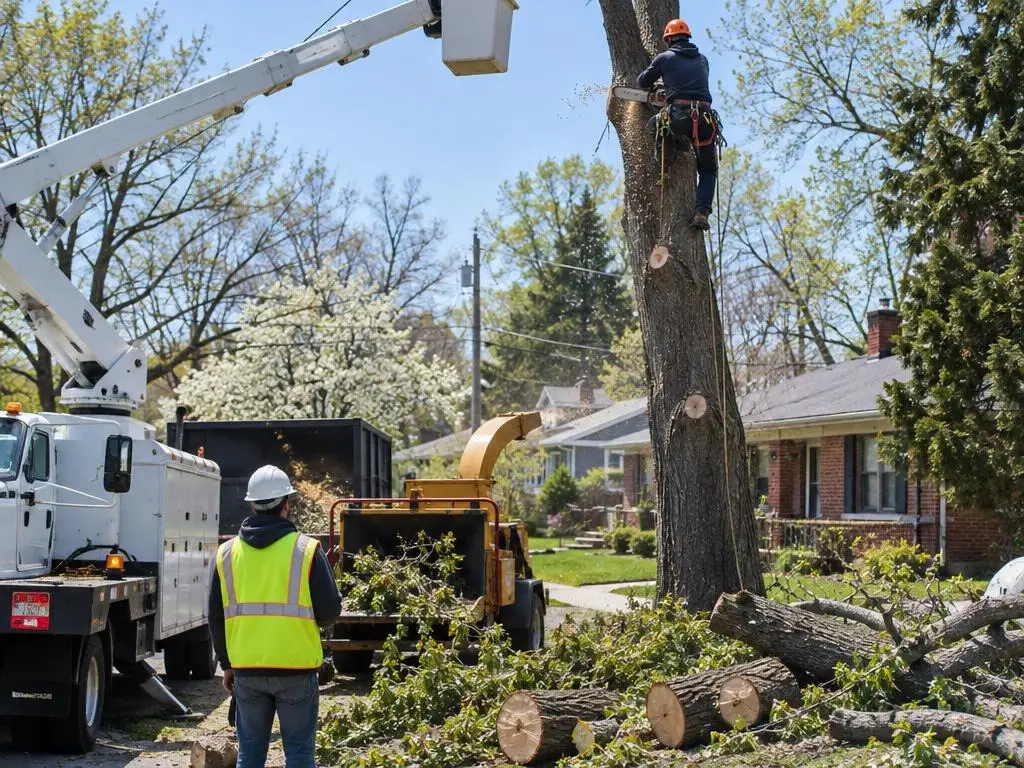
Our Services in Fordland, MO
Fordland Questions
My tree was hit by lightning. Will it die?
Not necessarily. Some trees survive strikes with minor damage, while others die within a year. Watch for bark loss, cracks and wilting leaves. We can look at it and give you an honest opinion.
Do you come out to rural properties near Fordland?
Yes. We work in Fordland and on farms and acreage along U.S. 60 and the surrounding area.
Can you take down trees near a fence without damaging it?
Usually, yes. We fell trees away from fences where possible and take them down in sections when space is tight.
What happens to the wood?
We can leave it for firewood, chip it or haul it away. Ash wood should stay local because of the ash borer.
Will a tree on a hill blow over more easily than one in a valley?
A tree on an exposed hilltop takes stronger, more frequent wind, so defects that would be harmless in a sheltered spot matter more. Shallow, rocky soil can also limit how deeply roots anchor. Both are reasons to keep an eye on large trees near the house.
Free Estimates in Fordland, MO
Free estimates in Fordland and along U.S. 60.
Tree Service Near Fordland
- Tree Service in Springfield, MO
- Tree Service in Nixa, MO
- Tree Service in Ozark, MO
- Tree Service in Republic, MO
- Tree Service in Battlefield, MO
- Tree Service in Brookline, MO
- Tree Service in Willard, MO
- Tree Service in Strafford, MO
- Tree Service in Rogersville, MO
- Tree Service in Clever, MO
- Tree Service in Sparta, MO
- Tree Service in Highlandville, MO
- Tree Service in Fair Grove, MO
- Tree Service in Ash Grove, MO
- Tree Service in Walnut Grove, MO
- Tree Service in Pleasant Hope, MO
- Tree Service in Marshfield, MO
- Tree Service in Fremont Hills, MO
- Tree Service in Billings, MO
- Tree Service in Marionville, MO
- Tree Service in Seymour, MO